Douglas County, Nevada, Tahoe Township only. Permit counts in this guide are a snapshot as of October 2026.
If you're considering a vacation rental on the Nevada side of Lake Tahoe, the rules are specific, neighborhood-driven and strictly limited to the Tahoe Township of Douglas County. You can't operate a short-term vacation home rental (VHR) anywhere in the Carson Valley, Minden or elsewhere in the county. It's only allowed along the East Shore of Lake Tahoe south of Cave Rock, through Zephyr Cove and Round Hill and up Kingsbury Grade.
In Douglas County, a VHR is a home rented for 28 days or less, and it's been permitted in the Tahoe Township by ordinance since 2005. Here's how the rules break down neighborhood by neighborhood, what a permit costs, and what the county expects from owners once a permit is in hand.
North of Cave Rock: No New Vacation Rentals in Douglas County
As of this writing, vacation rentals aren't allowed north of Cave Rock State Park. Douglas County Commissioners voted 3-2 on December 21, 2023 (Ordinance 2023-1627, often called the "Tarkanian Ordinance") to prohibit or severely restrict VHRs in residential communities north of Cave Rock. The reason given was their distance from the High Density Tourist area in Stateline.
New permits were halted starting January 1, 2024 in areas including Cave Rock Cove, Logan Creek, Shakespeare Point, Uppaway and non-affiliated Glenbrook parcels. Existing permits were set to expire by December 31, 2024. A legal challenge was filed, but a district court judge upheld the ordinance in August 2024.
There are limited residual nuances around certain Glenbrook communities, but the practical result for buyers is that VHRs aren't an option north of Cave Rock. Under the current county code, the Glenbrook communities that can still hold permits are capped at 15% density, and those owners may only rent to people who also own property inside those same communities. If you're shopping in Glenbrook on the East Shore, plan on it as a personal-use home.
South of Cave Rock: Neighborhood-by-Neighborhood VHR Permit Availability in Douglas County
South of Cave Rock, VHR permits are allocated on a neighborhood basis. Each area has a fixed number of allowed units (generally tied to density limits of 15% for single-family and higher in some multi-family zones), and availability fluctuates as permits are used, revoked or expire. The county's code sets the general limit at 15% of dwelling units per residential community, with Tahoe Village allowed up to 40%.
The numbers below reflect the situation at the time of this writing and can change. Always verify the current status on Douglas County's interactive VHR map before making an offer.
How to Check the Douglas County VHR Map
Douglas County keeps a real-time map you can use to check current availability. Go to the county's Vacation Home Rentals page for the Tahoe Township and look for the "Search a Geographic Map of VHRs" section. The interactive map shows neighborhood boundaries, current density and permit status in real time.
The county also posts a list of full neighborhoods and the current waitlist on its VHR permit waitlist page, which is the fastest way to see where a new permit is off the table today.
East Shore Neighborhood VHR Counts (Zephyr Cove, Round Hill and Stateline Area)
- Cave Rock: 11 units allowed; space currently available.
- Lincoln Park: 6 units allowed; only 2 permits available. Lincoln Park also has its own rules in the county code: VHRs must be separated by at least two non-VHR lots, permits can only be renewed twice (three years total), nighttime occupancy is capped at six and parking at two spaces.
- Lake Ridge HOA: No VHR permits allowed whatsoever.
- Hidden Woods / private luxury lakefront properties (south of Lake Ridge, $15M to $60M range in recent years): 12 units allowed; 4 currently in use, leaving 8 available.
- Skyland: 35 units allowed; 16 remaining.
- Zephyr Cove proper (near Zephyr Cove Beach): 11 units allowed; only 2 available.
- Zephyr Knolls / Zephyr Heights: 38 units allowed; only 2 available (higher density area).
- Marla Bay: 17 units allowed; 2 available.
- Pinewild (turnkey condos popular with second-homeowners; the HOA handles most maintenance): 20 units allowed; currently zero available.
- Round Hill (part of the Round Hill General Improvement District): 32 units allowed; currently 24 permits in use. Note that active VHR permits here trigger higher water and sewer rates from the Round Hill GID. It's a desirable neighborhood, but the increased utility costs mean the numbers don't pencil quite as cleanly as in some other areas. Factor this into your pro forma.
- Elk Point in Zephyr Cove: Extremely desirable (homes often sell within days), with a private beach and HOA. 11 units allowed; all 11 currently in use. Buyers often purchase here and wait for a permit to open if one is revoked.
- Lake Village: 50 units allowed; all 50 currently in use (higher housing density).
- Tahoe Beach Club (lakefront development): 14 units allowed; all 14 currently in use.
- Kahle Park / Oliver Park area: 11 units allowed; 7 currently VHRs, leaving 4 available.
- Sierra Colina (small pocket of newer construction): 7 units allowed; 1 available.
If you're looking at a specific pocket, my Round Hill neighborhood guide and Kahle Park area guide cover what it's like to own there beyond the permit math.
Kingsbury Grade VHR Permits in Douglas County (Lower to Upper)
- Middle Kingsbury: 17 units allowed; 4 available.
- Chimney Rock (south side of Kingsbury): 62 units allowed; 42 currently in use, leaving 20 available.
- Palisades: 16 units allowed; 15 in use, only 1 available.
- Kingsbury Heights: 16 units allowed; 15 in use, only 1 available.
- Upper Kingsbury Single Family (larger lots): 12 units allowed; all 12 currently in use (zero available).
- Upper Kingsbury Multifamily: 38 units allowed; all 38 currently active.
- Kingsbury Village (north side of Kingsbury Grade): 36 units allowed; all 36 currently in use.
Tahoe Village: Douglas County's Highest VHR Availability Near Heavenly
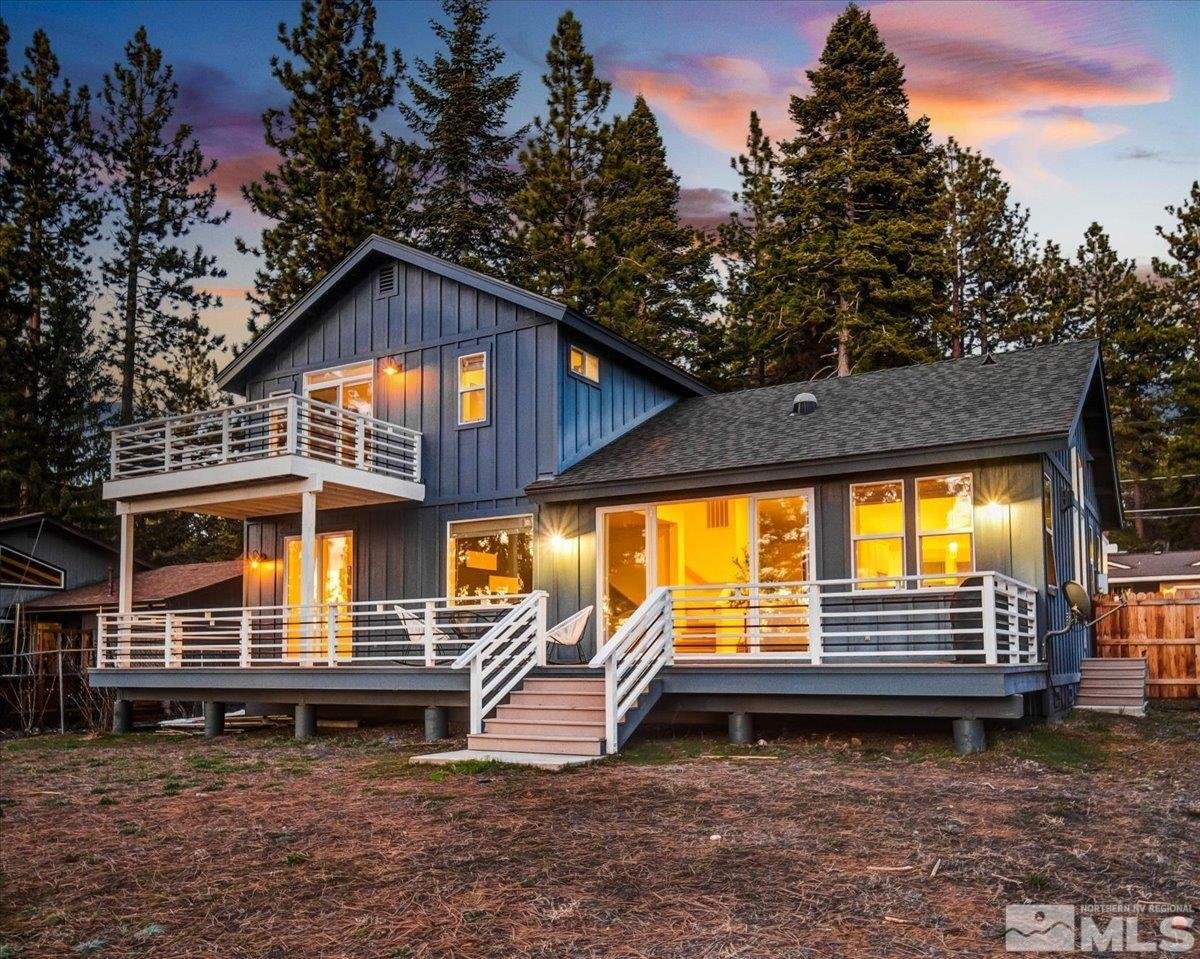
Tahoe Village (closest to Heavenly) has by far the most capacity on the Nevada East Shore. There are 358 total allowed units, and only 161 are currently being used as rentals, leaving approximately 197 available. It's the strongest option if you want to purchase a sub-$1 million property and put it into VHR service relatively quickly.
That extra room comes straight from the code. Because Tahoe Village already has a high density of timeshares and hotels, the county allows VHR density there up to 40% instead of the usual 15%.
Douglas County maintains an interactive map showing neighborhood boundaries, density and permit status. The county's overall Tahoe Township cap is 600 permits. As of October 20, 2026, the county reported 563 VHR permits issued.
Douglas County VHR Permit Tiers and Occupancy Limits
Douglas County issues three tiers of VHR permits, and the tier you qualify for shapes how many guests you can host.
- Tier 1 (owner occupied): You live in the home and are present whenever it's rented. You share living, cooking and eating space with guests, and no more than four renters can stay at a time.
- Tier 2: Up to 10 nighttime occupants. Daytime occupancy can be no more than double the nighttime number.
- Tier 3: 11 or more nighttime occupants. This requires a special use permit from the county's VHR Advisory Board, and a home only becomes eligible after running as a Tier 2 VHR in good standing for at least 12 months.
Nighttime occupancy is capped at two people per bedroom. Homes with four or fewer bedrooms can add two more occupants if at least two guests are 18 or younger and there's at least one parking space for every four occupants. Quiet hours in Douglas County VHRs start at 9:00 pm and last until 8:00 am.
What a Douglas County VHR Permit Costs
The Douglas County VHR program is self-funded by permit fees. Here's the county's posted fee schedule, including the 4% technology fee, as listed on its VHR permitting and fee page:
- Tier 1: $613.60 new, $494.00 renewal
- Tier 2: $2,152.80 new, $1,601.60 renewal
- Tier 3: $4,924.40 new, $4,430.40 renewal
- Annual permit draw or waitlist fee: $124.80
Heads up: the county has announced that VHR fees will increase 15% on November 1, 2026, so expect the numbers above to go up. Tahoe Douglas Fire also charges its own fee for the required safety inspection.
Permits renew every year, and there's no grace period. If a permit lapses, the renewal is treated as a brand-new application and falls under the permit cap, which can mean the waitlist in a full neighborhood.
Local Contact, Inspection and Insurance Rules for Lake Tahoe East Shore VHRs
Owning a VHR on the Douglas County side of Lake Tahoe comes with real operating duties. The main ones in the county code:
- Local contact: Every VHR needs a local contact who lives and works within 30 minutes of the home and is available 24 hours a day. After a complaint, that person must get to the property within 30 minutes, resolve the issue within one hour and report it to the county within 72 hours.
- Certification: Owners, local contacts and property managers must complete a county VHR training course and pass a certification test.
- Property manager: A local licensed property manager is required for Tier 2 homes with a nighttime occupancy of 10 and for all Tier 3 homes, unless the owner manages it and lives within one hour.
- Fire and life safety inspection: You'll schedule an annual inspection with Tahoe Douglas Fire. The county says appointments can take up to 60 days to book.
- Insurance: You need at least $500,000 in general liability coverage for Tier 1 and Tier 2, or $1,000,000 for Tier 3, with a policy that clearly covers short-term rental use.
- Trash and noise: A bear proof trash solution is required. Tier 3 homes must have noise monitoring devices, and Tier 1 and Tier 2 homes need them after one substantiated noise complaint.
New permits and renewals are filed through the county's OPAL online permit portal, which the county started using on March 23, 2026. A permit has to be issued before you can advertise or rent the home, and the county lists a civil penalty of up to $20,000 for unpermitted VHRs.
Transient Occupancy Tax on Lake Tahoe's Nevada Side
Lodging taxes are part of the pro forma for any Douglas County VHR. According to the county's room tax rates for the Lake Tahoe Township, the total is 14% plus a $5 per room, per night tourism surcharge. That's higher than the 13% charged elsewhere in Douglas County.
Room taxes collected for stays in one month are due by the last day of the following month. The county's resources page says filings and payments go through the HdL online portal, and renewals require records of paid lodging taxes showing the home was rented in the prior year.
How TRPA Fits Into Douglas County VHR Rules
The entire Tahoe Basin falls under the Tahoe Regional Planning Agency (TRPA), and the county code says TRPA asked Douglas County to adopt and run the Lake Tahoe VHR ordinance. The neighborhood boundaries used for density limits are based on TRPA plan area statements. TRPA also comes up with parking: VHR guest parking has to be on paved or covered surfaces, or on compacted areas TRPA has approved for parking.
How Douglas County Differs From South Lake Tahoe's VHR Rules
The state line is also a rules line. Everything in this guide applies to Douglas County, Nevada. The City of South Lake Tahoe is in California and runs its own separate VHR ordinance. I've written about the City of South Lake Tahoe VHR ordinance changes and the updated South Lake Tahoe VHR ordinance vote if you're comparing both sides of the line.
Key Takeaways for Lake Tahoe East Shore VHR Buyers
VHR permits in Douglas County are limited, neighborhood-specific, and don't automatically transfer with a sale. Under the county code, a permit becomes void when title transfers, with a narrow exception for moving title into a family trust or closely held entity the owner controls. Some neighborhoods are fully impacted with long waitlists; others still have availability.
Round Hill's higher GID water and sewer rates for active permits are a real ongoing cost that can affect cash flow. Working with a local agent who tracks current permit availability in real time matters, so you don't close on a property only to discover you can't obtain a VHR license.
These figures are a snapshot. Availability changes, ordinances get updated (the county has revised the VHR code multiple times) and enforcement remains active. Always confirm the latest numbers and requirements directly with Douglas County Community Development and Code Enforcement before writing an offer. Factor in HOA rules, TRPA considerations, parking, occupancy limits, local contact requirements and Transient Occupancy Tax obligations.
Frequently Asked Questions About Douglas County Vacation Rental Rules
Can I run a vacation rental anywhere in Douglas County, Nevada?
No. Douglas County only allows VHRs in the Tahoe Township at Lake Tahoe, so Minden, Gardnerville and the rest of the Carson Valley are off the table. Even inside the Tahoe Township, most areas north of Cave Rock can't get new permits.
How many VHR permits does Douglas County allow at Lake Tahoe?
The county caps the Tahoe Township at 600 VHR permits. As of October 20, 2026, Douglas County reported 563 permits issued, and many East Shore neighborhoods are already full.
Does a Douglas County VHR permit transfer when I buy a Lake Tahoe home?
No. Douglas County permits aren't transferable and become void when title changes hands, except for a transfer into the owner's own family trust or closely held entity. As a buyer at Lake Tahoe, you'll apply for your own permit, or join the waitlist if the neighborhood is full.
Which Lake Tahoe neighborhoods in Douglas County have the most VHR availability?
Tahoe Village near Heavenly has by far the most room, with about 197 open spots out of 358 allowed in my October 2026 snapshot. Skyland and Chimney Rock on Kingsbury Grade also had space, while Elk Point, Lake Village and Tahoe Beach Club in Douglas County were full.
What does a Douglas County VHR permit cost at Lake Tahoe?
Douglas County's posted fees for a new permit are $613.60 for Tier 1, $2,152.80 for Tier 2 and $4,924.40 for Tier 3, including a 4% technology fee. The county announced a 15% increase starting November 1, 2026, and Tahoe Douglas Fire charges separately for the safety inspection.
What is the lodging tax on a VHR in the Douglas County part of Lake Tahoe?
The Lake Tahoe Township of Douglas County charges 14% in room taxes plus a $5 per room, per night surcharge. Owners file monthly, and payments are due by the last day of the month after the stay.
How many guests can stay in a Douglas County VHR at Lake Tahoe?
Douglas County allows two nighttime guests per bedroom, with up to two extra in homes of four or fewer bedrooms if conditions on kids and parking are met. Tier 2 caps out at 10 nighttime occupants, and anything above that needs a Tier 3 special use permit. Lincoln Park on the East Shore has a lower cap of six.
Do I need a local contact for a Douglas County VHR near Zephyr Cove or Stateline?
Yes. Every Douglas County VHR, including homes in Zephyr Cove, Round Hill and Stateline, needs a local contact who lives and works within 30 minutes. That person must respond on site within 30 minutes of a complaint and resolve it within an hour.
Are Douglas County VHR rules the same as South Lake Tahoe's?
No. Douglas County, Nevada and the City of South Lake Tahoe, California each run separate programs with their own caps and rules. A home a few minutes apart at Lake Tahoe can fall under a completely different ordinance depending on which side of the state line it sits.
Talk to Matthew About a Douglas County VHR Property
If you're evaluating a specific property or neighborhood on the East Shore and want current VHR status, comps or help running the numbers, reach out. I'm happy to pull the latest details and walk you through the process. As a Zephyr Cove native with Team Blair Tahoe at Compass, I track these neighborhoods closely, and you can also see recent Lake Tahoe market reports before you call. Reach me at (775) 901-1465.
